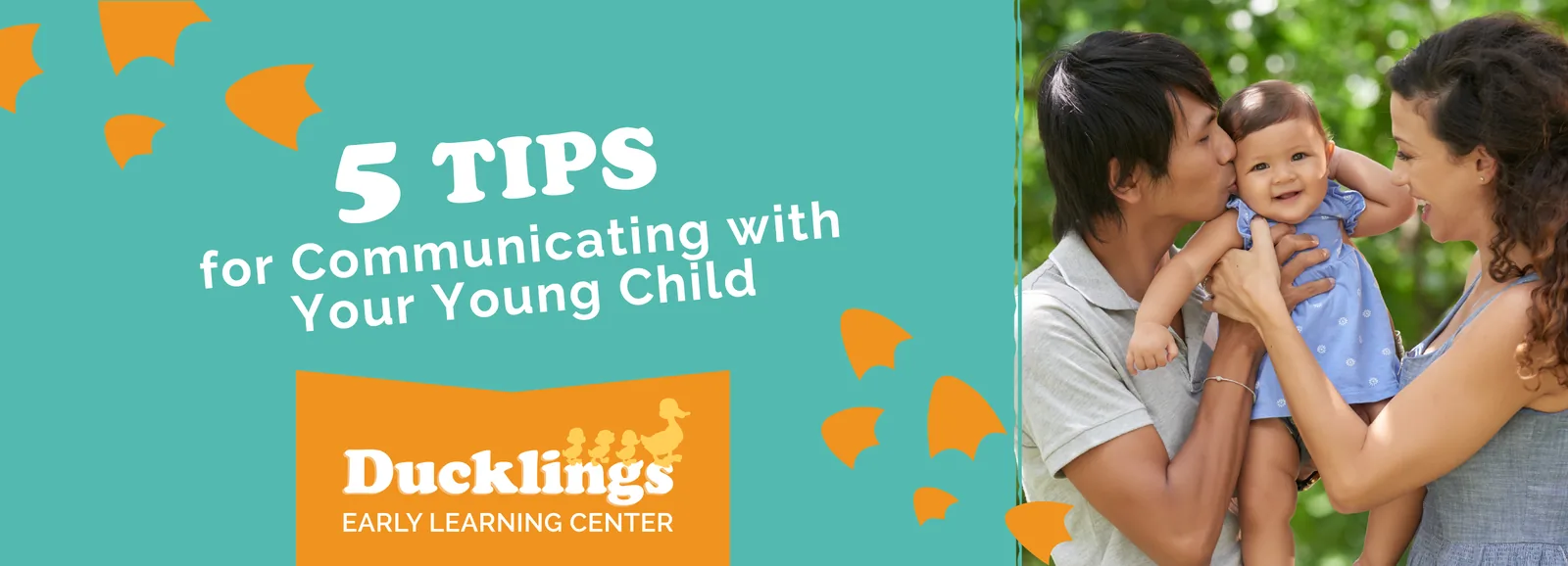
To communicate effectively with your child, it helps to respond to their behavior as a form of communication, get on their level physically, and ask specific questions instead of general ones.
Young children don’t have the vocabulary or emotional awareness to name what they’re feeling and ask for support directly. But they are asking. A child who says, “Will you come play with me?” may actually be saying, “I had a hard day and I need you.” You just have to know what to listen for.
For children ages 6 and under, behavior is language. Recognizing and understanding this language makes all the difference. A child who throws a tantrum after school may not be misbehaving. They may be overwhelmed, overstimulated, or just exhausted. A child who suddenly clings to you at drop-off may be anxious about something they can’t name yet.
Think of it this way: what you see on the surface is the behavior. What’s underneath is the feeling driving it. Hunger, frustration, loneliness, fear, and overstimulation all show up as behavior before they ever show up as words.
When a child asks you to play, they may be asking you to just be present with them. When they act out, they may be telling you something felt hard today. Your job as a parent is to stay curious rather than reactive.
Getting more than a one-word answer from a young child takes a little strategy. “How was your day?” will almost always get you “fine” or “good.” Here’s what works better:
These work better than “How was your day?” because they ask for a specific memory rather than a general summary.
That’s okay! Not every day needs a full debrief. Sometimes the most meaningful thing you can do is simply say yes when they ask you to play. Sit with them. Follow their lead. Connection doesn’t always look like conversation.
Over time, children who feel consistently heard are more likely to come to you when something is actually wrong. That trust is built in the small, ordinary moments, not just the big ones.
Communication is one of the most important things we nurture at Ducklings Early Learning Center. Our teachers are trained to read behavior as language, get down on a child’s level, and ask the kinds of specific, curious questions that help young children put feelings into words.
Our proprietary curriculum programs, created and trademarked by Ducklings and offered exclusively at our centers, build in countless small moments for children to practice expressing themselves, both with their teachers and with each other.
Ready to see what life at Ducklings looks like? Find a location near you and schedule a tour to meet our teachers and explore our classrooms in person.